Driving across Pakistan is arguably one of the most exhilarating travel experiences in Southern Asia. From navigating the world-famous Karakoram Highway to cruising along the coastal highways of Makran or exploring the historic road networks of Punjab, embarking on a self-drive adventure provides an unmatched sense of freedom.
While global fuel prices have fluctuated upwards in recent years, opting to rent a car from major hubs like Islamabad Airport remains a remarkably practical and cost-effective choice. It allows families and small groups to split transport costs while avoiding the rigid schedules and limitations of public buses, allowing you to detour to remote mountain villages or stop at roadside food stalls whenever you want.
To get the most out of your journey, understanding how to efficiently fuel up in Pakistan is an essential skill for any driver. Knowing what to expect regarding the full-service system, local fuel types, and available payment methods ensures a seamless experience as you navigate the country's diverse landscapes with complete confidence.
Refuelling a rental car across Pakistan requires a basic understanding of the fuel types and service conventions. Knowing what to expect at a petrol station ensures a smooth journey, whether you are navigating major cities or rural villages.
Before you fuel up in Pakistan, you should confirm your vehicle’s precise requirements to avoid misfuelling and paying for expensive engine repairs. You can find the correct fuel type for your car by checking the sticker inside the fuel filler door or consulting your rental agreement. Most rental vehicles, such as hatchbacks and sedans, run on Super Petrol, the standard unleaded petrol available at every station across the country. Meanwhile, premium luxury cars run on High-Octane Petrol and large SUVs or 4x4 vehicles usually use High-Speed Diesel.
Pakistan boasts an extensive network of petrol stations operated by both state-owned enterprises and international brands. It is highly recommended to stick to well-established, branded stations. These major stations adhere to strict quality control standards, ensuring that fuel is properly filtered and that pumps are accurately calibrated.
Take note that station density changes dramatically as you leave major metropolitan areas like Islamabad, Lahore, or Karachi and head towards remote regions like Gilgit-Baltistan. While urban centres offer brightly lit, multi-lane petrol stations that operate around the clock, rural routes rely on smaller, sparsely distributed outlets. Remember to fill your tank before embarking on a long cross-country journey, and never let your fuel level go below half-full.
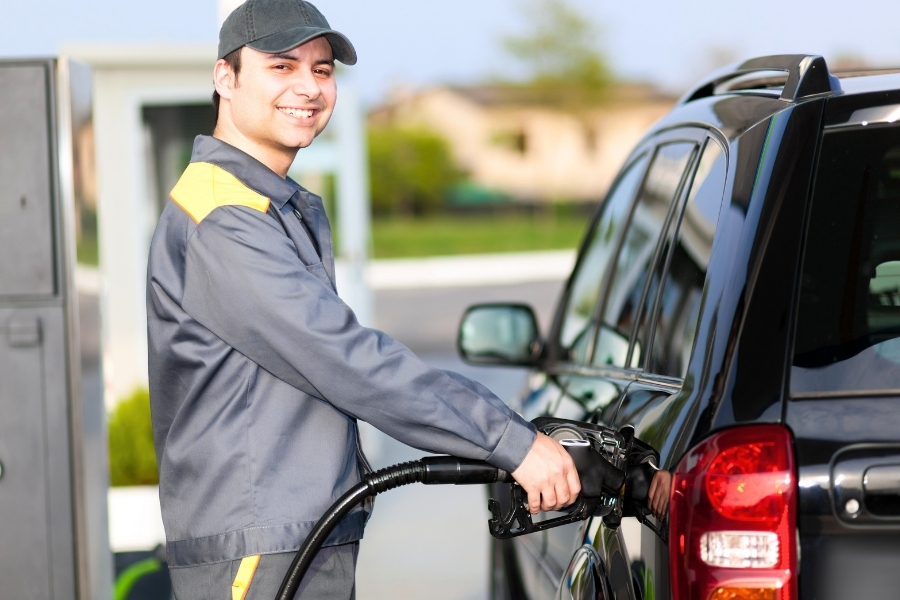
Almost all petrol stations in Pakistan operate on a full-service system, employing attendants who manage the entire refuelling process. When you pull into a pump to fuel up, you don’t have to get out of your vehicle; simply follow these easy steps to ensure a smooth transaction.
Align your rental vehicle's fuel door with the correct pump bay based on your fuel requirements and switch off the engine completely.
Lower your window and tell the attendant the exact fuel type and the required amount, specified either in litres or monetary value in Pakistani Rupees (PKR).
Look at the digital meter on the pump before fueling starts to ensure it has been reset to zero.
Remain inside your rental vehicle while the attendant handles the nozzle and pumps the requested volume.
Pay the attendant directly in cash or present your credit or debit card if a working terminal is present, and request a receipt for your travel expenses or rental records.
If requested, the attendant can wipe your windscreen or check your tyre pressures before you drive off safely.

Managing payments when you fuel up in Pakistan requires a blend of preparation and awareness of the local financial infrastructure, ensuring a smooth transaction whether you are filling the tank along a primary motorway or in a remote mountain station.
Cash remains the undisputed king across the country. While credit and debit cards, as well as digital QR payment systems, are widely accepted at major stations along intercity motorways and within large cities, network outages can happen anywhere. Having Pakistani Rupees (PKR) on hand is essential for securing payments across rural highways and mountain passes where internet connectivity is unreliable, and card terminals might not always work. Always carry sufficient cash to cover at least two full tanks of fuel.
Tipping petrol station attendants is not legally mandatory, but it is a customary gesture that is deeply appreciated by locals. If an attendant goes out of their way to wipe down your dust-covered windscreen, check your tyre pressure, or inspect under the hood, a small tip of PKR 50 to 100 is considered generous and polite.
It is vital to understand and comply with your car rental firm’s fuel policy. Most reputable agencies operate on a Full-to-Full basis, meaning you collect the car with a full tank and must return it the same way. Failing to do so usually results in the agency filling up the tank and charging you an inflated per-litre rate alongside a hefty refuelling service fee.

While petrol prices are bound to global market dynamics, careful planning and smart driving strategies can drastically reduce your overall expenses while touring Pakistan.
Pick a Fuel-Efficient Car: Unless your route explicitly requires navigating rugged off-road terrain or deep river crossings, avoid renting a heavy 4x4 vehicle. Instead, opt for an economy car or a compact SUV to reduce your petrol consumption during both city exploration and long motorway journeys.
Maintain Steady Speeds: Pakistan’s intercity motorways permit speeds up to 120 km/h, but driving at this upper limit causes aerodynamic drag to sharply spike fuel consumption. Maintaining a steady cruise between 95 and 105 km/h allows the engine to operate within its most economical band while keeping enough speed.
Manage Climate Control: Running the air conditioning constantly places a substantial load on the engine, especially under Pakistan’s scorching midday sun. During cooler morning or evening drives, turn off the climate control to save fuel, but keep the windows up at high speeds to avoid creating excess aerodynamic drag.
Check the Tyre Pressure: Under-inflated tyres considerably increase rolling resistance, forcing the vehicle to burn significantly more petrol to cover the same distance. Take advantage of the free air pumps available at major petrol stations to check your pressures every few days and put air in your tyres if needed.
Shut the Engine at Stops: Traffic gridlock in metropolitan centres like Lahore and Karachi, combined with slow-moving queues at motorway toll plazas, often leads to prolonged idling that consumes fuel needlessly. Switch off the ignition whenever you expect to remain stationary for longer than a minute to conserve your fuel.
Are petrol stations in Pakistan open 24 hours daily? Stations situated along major intercity motorways and inside primary urban centres generally operate 24/7. However, pumps located in remote valleys, smaller towns, or high-altitude regions usually close by dusk, so it is best to complete your refuelling before nightfall.
Are self-service stations available across Pakistan? Self-service is virtually non-existent, as every station employs station attendants to handle the refuelling process for you. You simply state your required fuel type and amount, then verify that the digital display reads zero before the attendant begins pumping.
Can I pay for the fuel using my credit or debit card? While petrol stations in major hubs do accept credit and debit cards, network outages may occur in remote areas, making card payment unavailable. You should always carry enough cash in Pakistani Rupees (PKR) to cover your refuelling, especially through rural regions.
What should I do if the wrong fuel is put into my rental car? If the wrong fuel is accidentally put in your vehicle, do not turn on the ignition under any circumstances. Immediately notify the station manager and contact your rental company’s hotline so a mechanic can be dispatched to drain and flush the fuel tank safely.
What is the standard fuel policy for car rentals in Pakistan? Most Pakistani rental agencies operate on a strict Full-to-Full policy, requiring you to return the car with a full tank. Returning the vehicle with less fuel than required usually results in expensive refuelling charges and administrative fees added to your final bill.
Successfully learning how to fuel up in Pakistan is easy once you know what to expect. By confirming your rental vehicle’s fuel requirements, choosing to fill your tank in branded petrol stations along the major hubs, keeping enough cash on hand, and adopting smart driving habits, you can save money and keep your road expenses entirely manageable.
Driving through Pakistan offers an extraordinary adventure, granting you direct access to breathtaking natural landscapes, historic cultural monuments, and warm hospitality that guided tours simply cannot match. With the tips from this comprehensive guide, you can confidently navigate the roads without worries. So, book your rental car, plan your route, and map out your fuel stops for an unforgettable road trip across Pakistan.